An Epic Snowboarding Elopement in Colorado - Real Elopement Breakdown
The kind of wedding day you don’t forget
There is a particular kind of winter morning in Colorado that makes the whole world feel as though it has stepped half a pace away from itself. Sound softens. Distance blurs. The mountains, which on clear days can appear so crisp they almost seem etched into the sky, withdraw behind weather and become something more suggestive than visible. Snow falls in thick, confident strokes. Branches collect white. Cars wear it on their roofs like a second skin. Even before sunrise, the day already feels underway, already carrying some secret momentum of its own.
This was the kind of morning Gela and TJ got married.
Arriving to the AirbnB
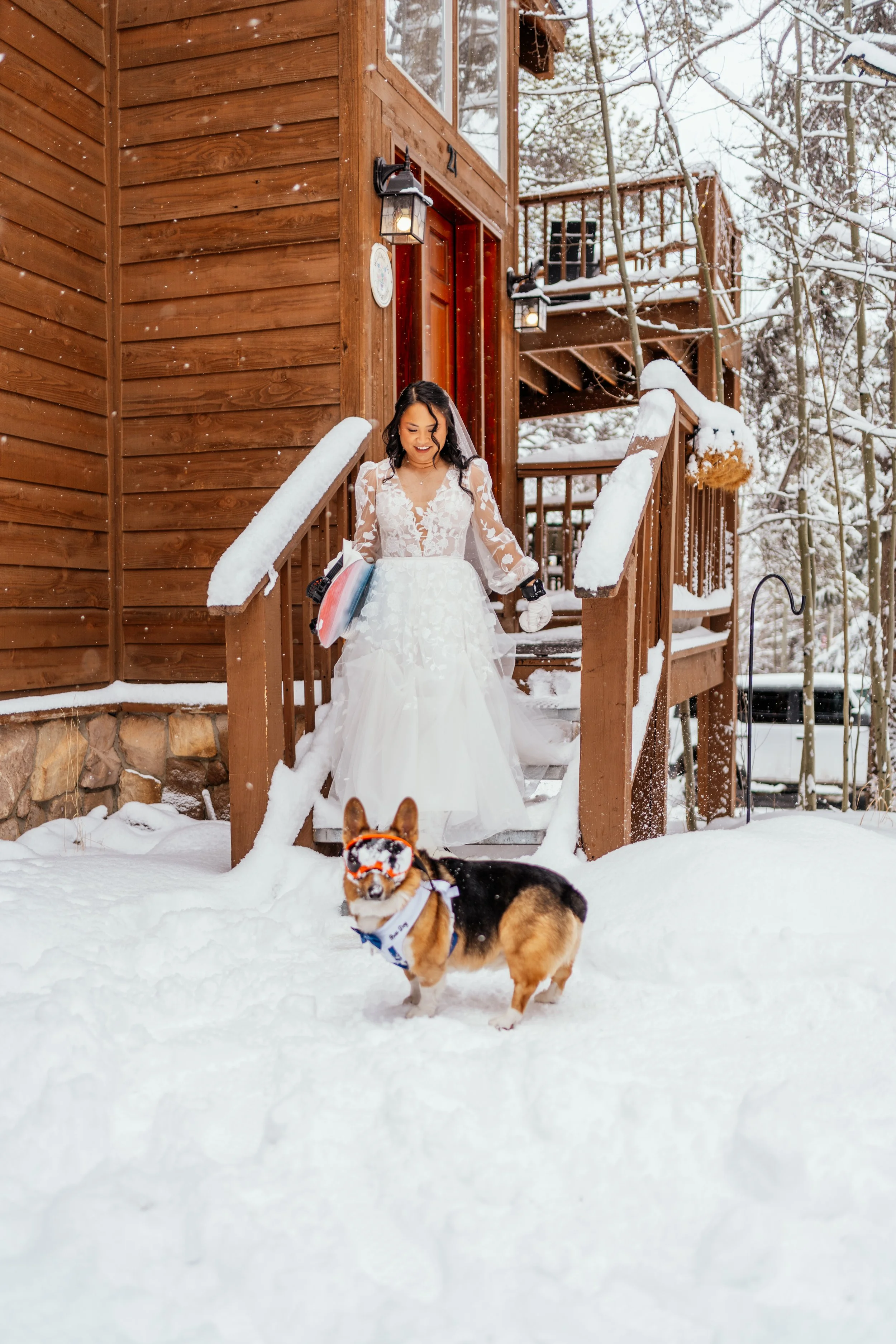
Long before the vows, before Sapphire Point, before the ski lift and the applause at the bar and the champagne and the shouting and the dinner and the small, ecstatic chaos of a night fully lived, there was just the dark road from Boulder and the sense that all of us were moving toward something both intimate and expansive at once. We left home at around 3:30 in the morning to meet them at their Airbnb around five, the kind of early start that temporarily rearranges a person’s relationship to time. The body is awake before the mind has fully caught up. The highway is quiet. Everything feels a little heightened. By then the snow was already coming down hard, and the weather, which in another context might have been called inconvenient, had already begun to declare itself as one of the central characters of the day.
The first hours of an elopement are often my favorite, not because they are the most dramatic, but because they contain that very specific emotional atmosphere that only seems to exist right before something life-changing happens. It is not exactly nervousness and not exactly excitement, though it contains both. It is the suspended feeling before the day commits to itself. People are still getting dressed. Family members are moving around the kitchen or the bedroom or the hallway with quiet purpose. Someone is pinning a veil. Someone else is fastening cufflinks. There is usually coffee somewhere, going lukewarm on a counter. The room feels ordinary in all the expected ways, and yet every gesture inside it has acquired a kind of brightness. A lot of Gela’s loved ones were there helping her into her dress and veil, while TJ had family there too, getting ready in his own quieter orbit. It was less a production than a gathering of care.
Getting Ready
There is something particularly moving about watching people be helped into a major moment of their lives. Weddings are so often discussed in terms of aesthetics, timelines, or locations that the gentler mechanics of them can be overlooked. The hand at the small of the back. The friend fixing a collar. The mother noticing the hem. The collective effort of getting someone ready for one of the biggest mornings they will ever have. There was a “nervous excitement” and “nervous energy” that fills this stretch of time, and that feels exactly right. It is the emotional weather inside the emotional weather. Outside, snow piled up on the world. Inside, anticipation did the same.
At one point, TJ stood at the window watching the snowfall, and it is easy to imagine why that image would have landed. A groom at a window, the storm beyond him, the day not yet fully begun. These are the moments that often end up telling the truth of a wedding day more clearly than the grand ones do. Not because the vows matter less, but because people are so unguarded in these smaller intervals. They have not yet stepped fully into being observed. They are just there, in the weather of their lives, trying to take it in.
And then, because all wedding days eventually leave the preparatory hush behind, it was time to go to Sapphire Point.
The Ceremony at Sapphire Point
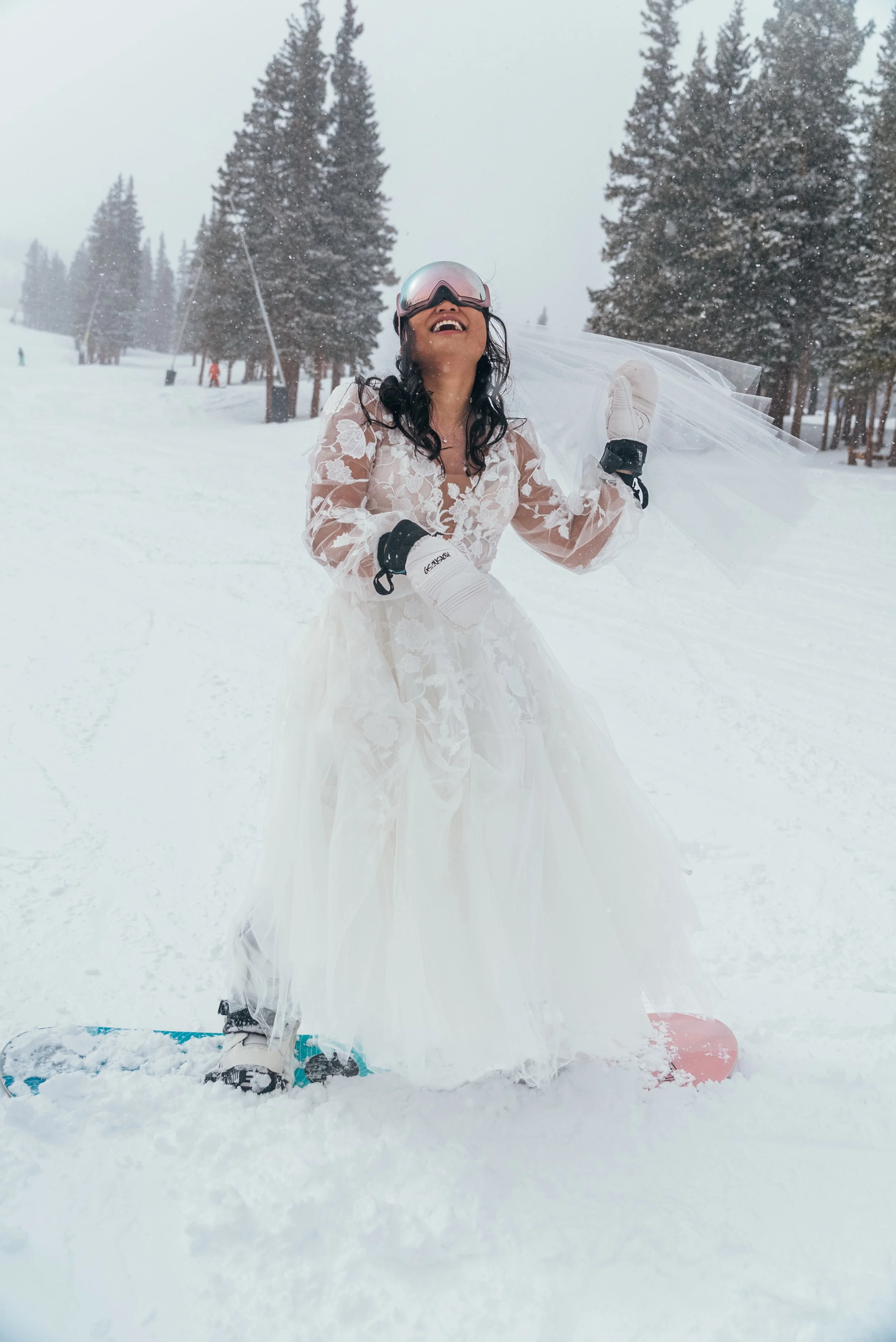
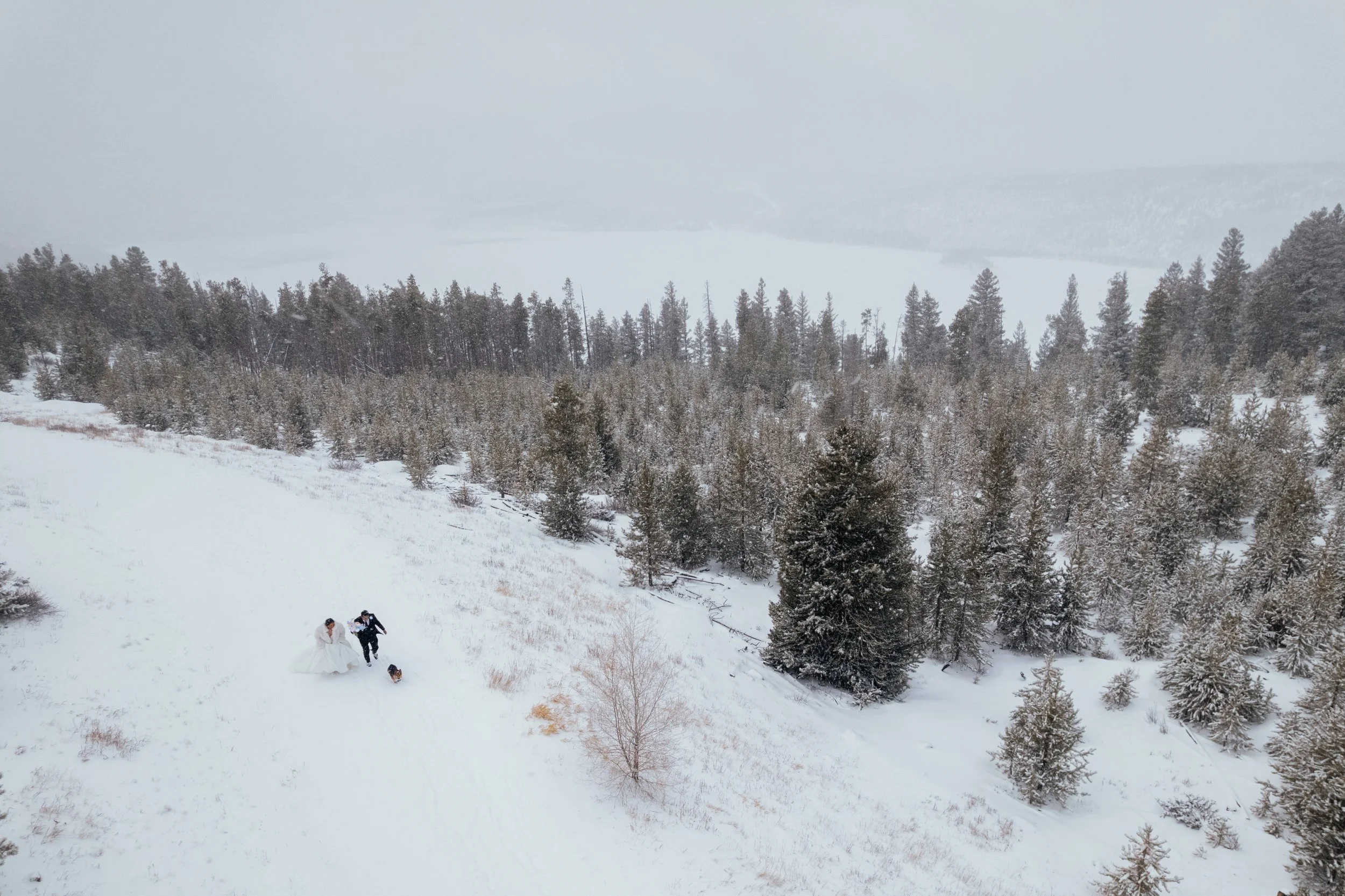
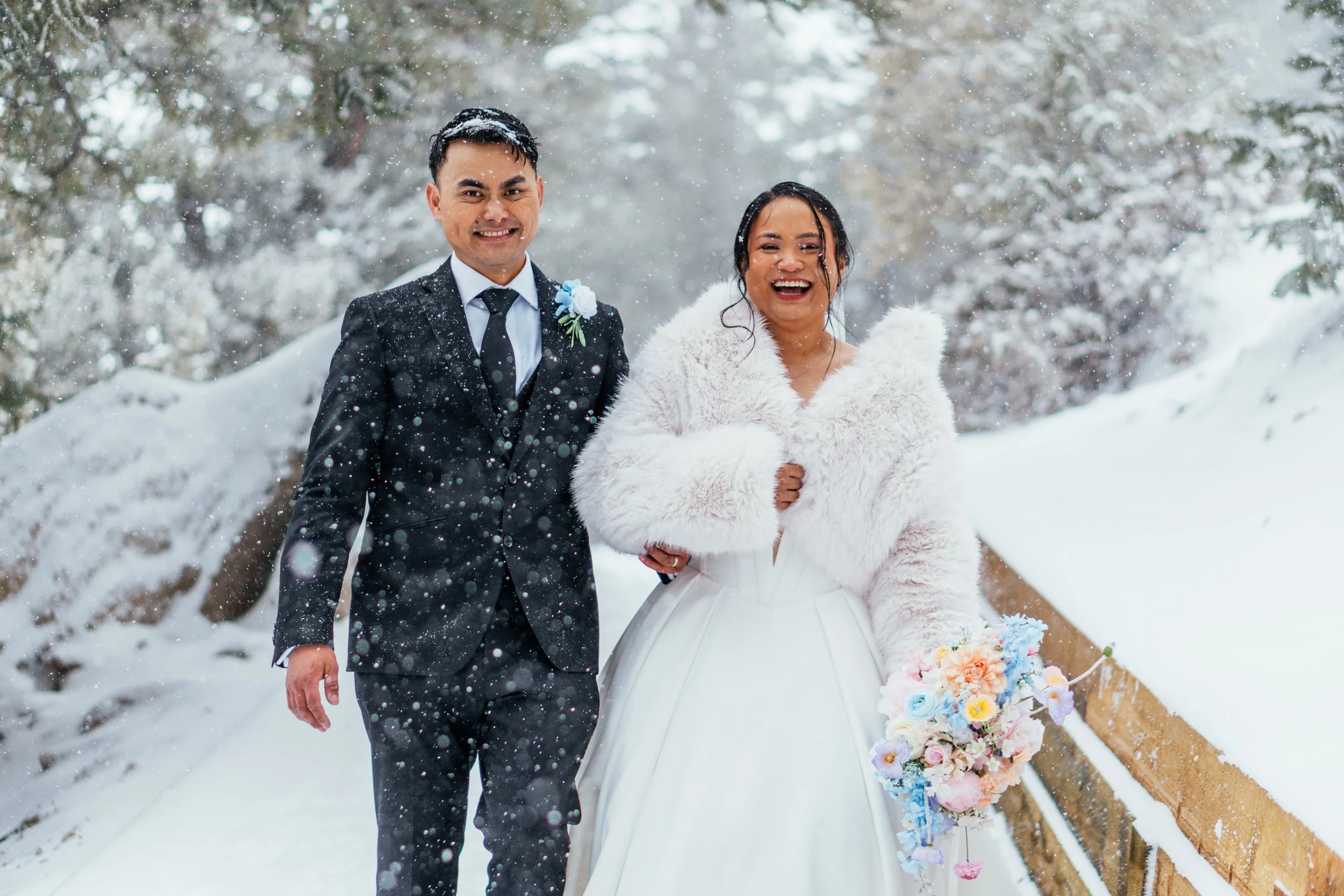
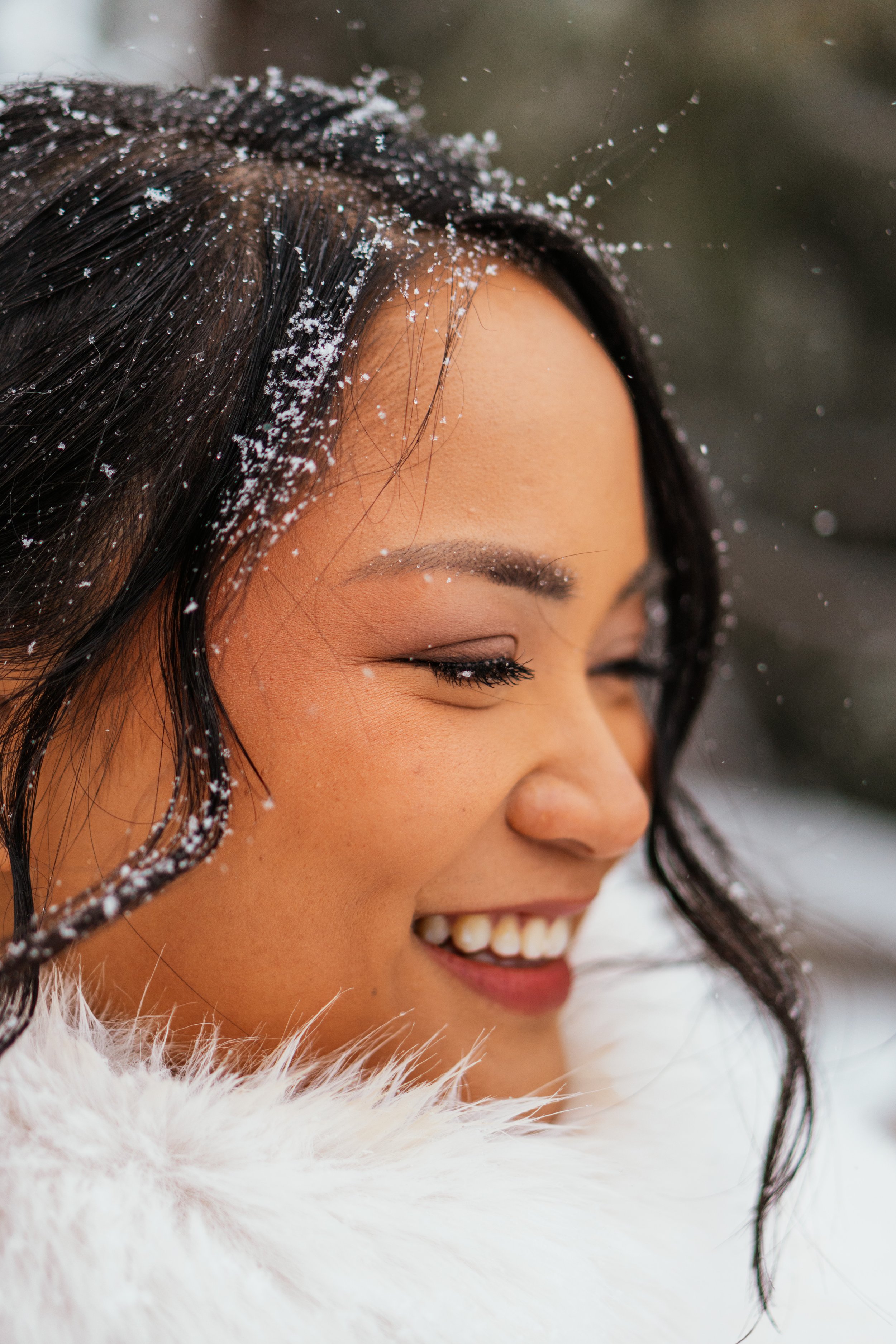
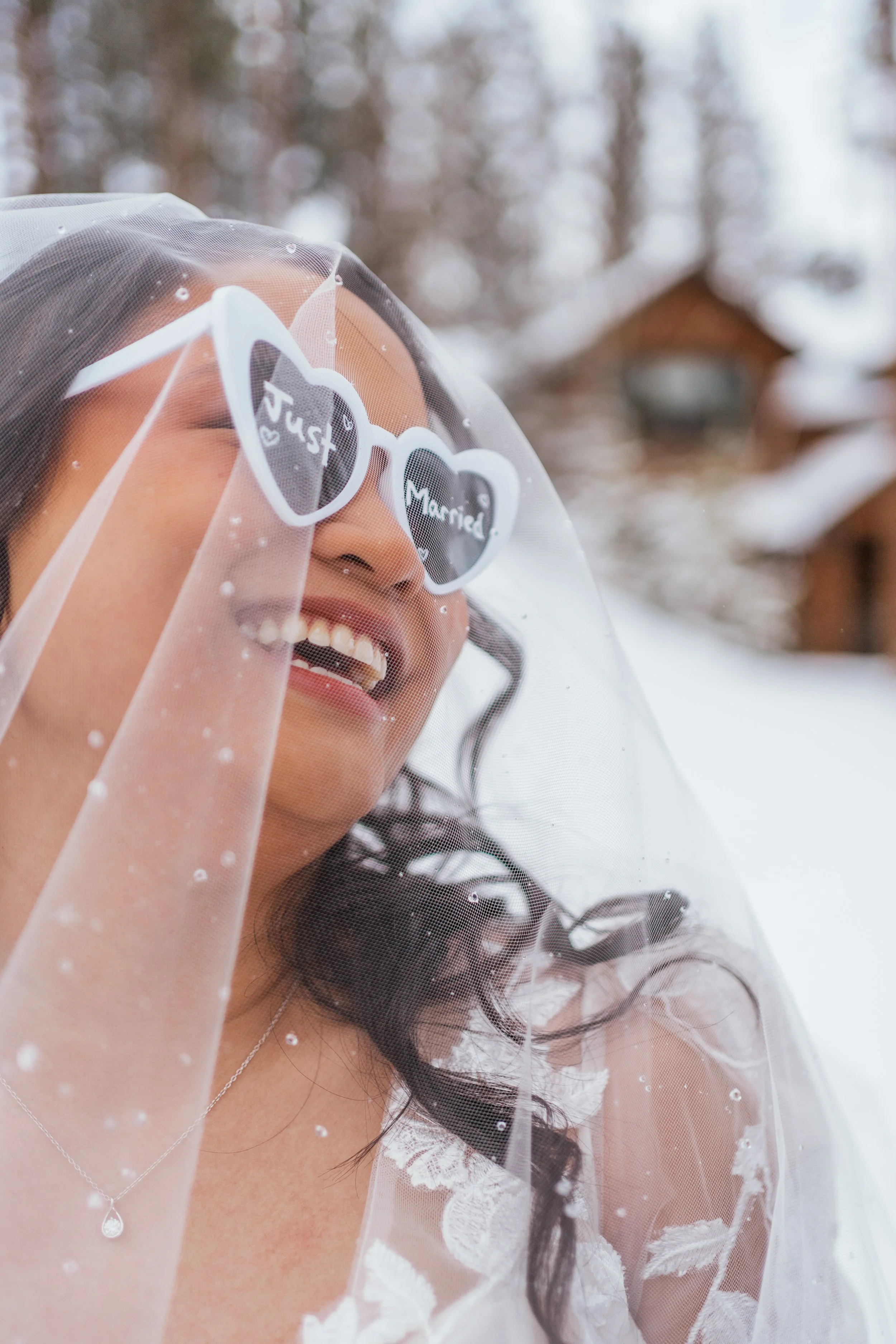
Ordinarily, the drive there delivers one of those mountain panoramas that people travel to Colorado hoping to find. On this day, the Sapphire Point view was mostly gone. Or rather, it had been replaced by something else. The snow was “dumping” in the most gorgeous way. The vista had disappeared, but the mood had arrived. That strikes me as one of the most beautiful little reversals in the whole story. Couples often imagine that scenic beauty must take one specific form. Bluebird skies. Sharp peaks. A wide clean overlook. Yet weather has its own authority. What happened here was not that the beauty failed to show up. It simply chose another costume. Snow clung to Gela’s hair, to her veil, to the fur coat she was wearing. The air itself became the atmosphere the day needed. You could not see as far, but you could feel more.
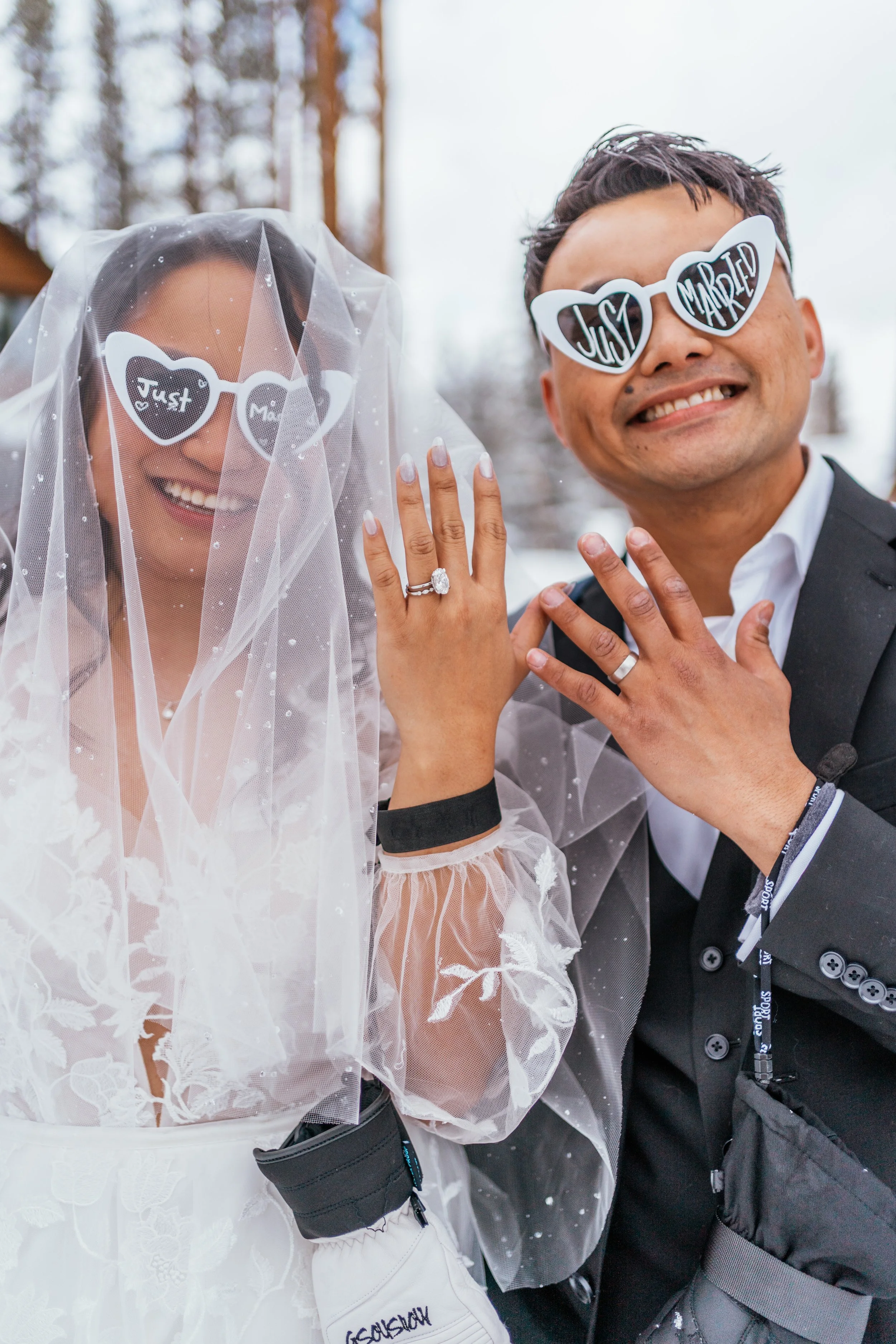
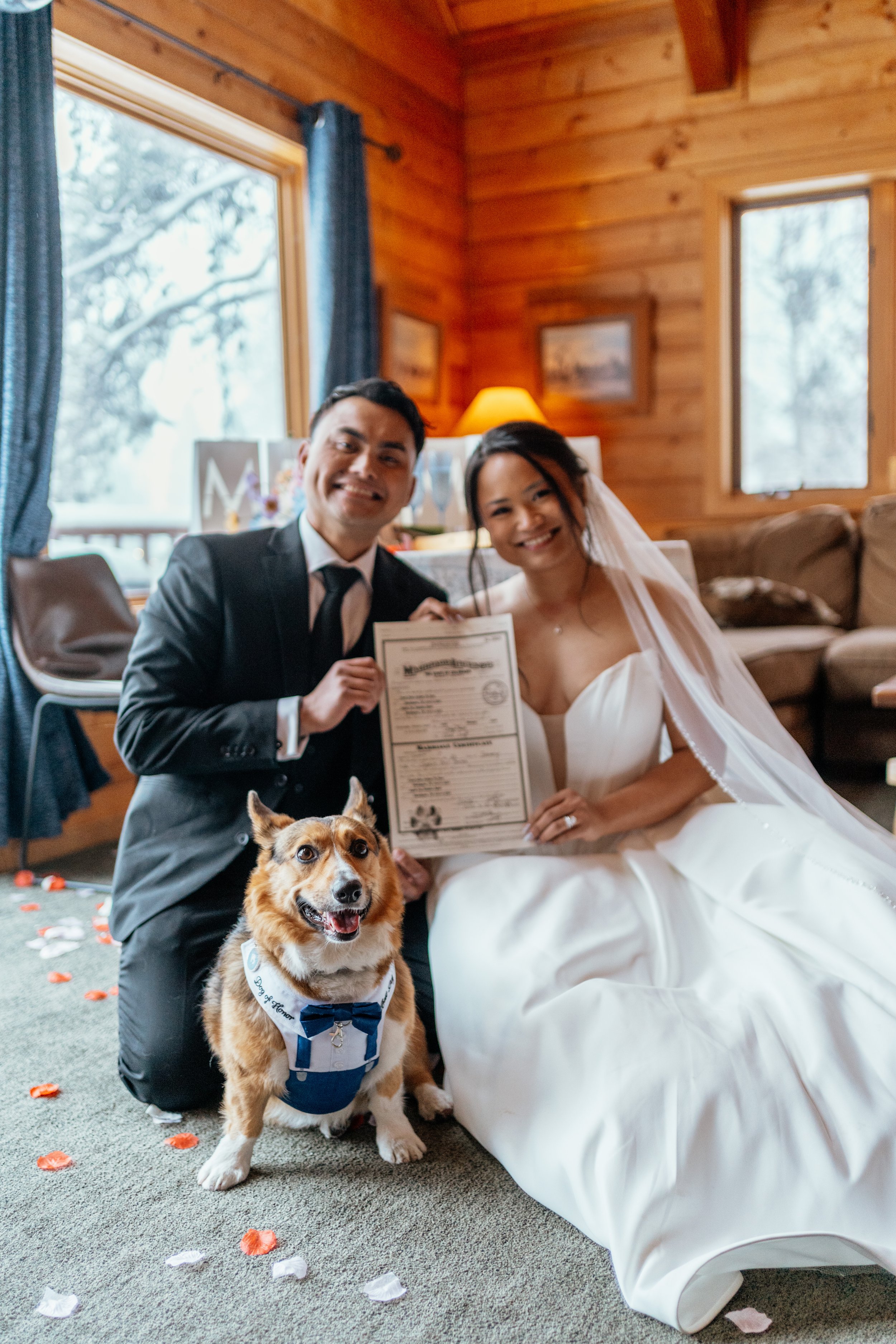
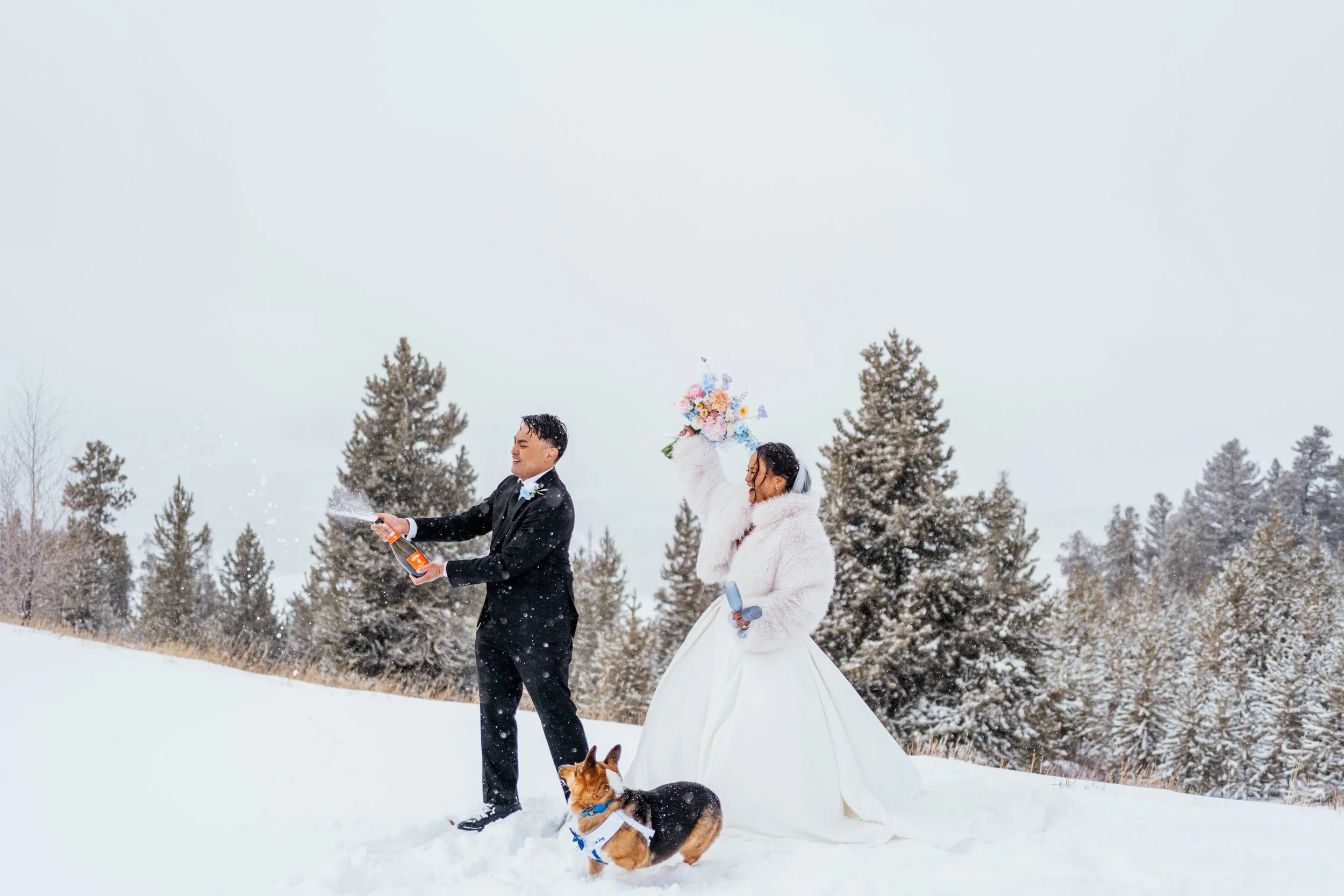
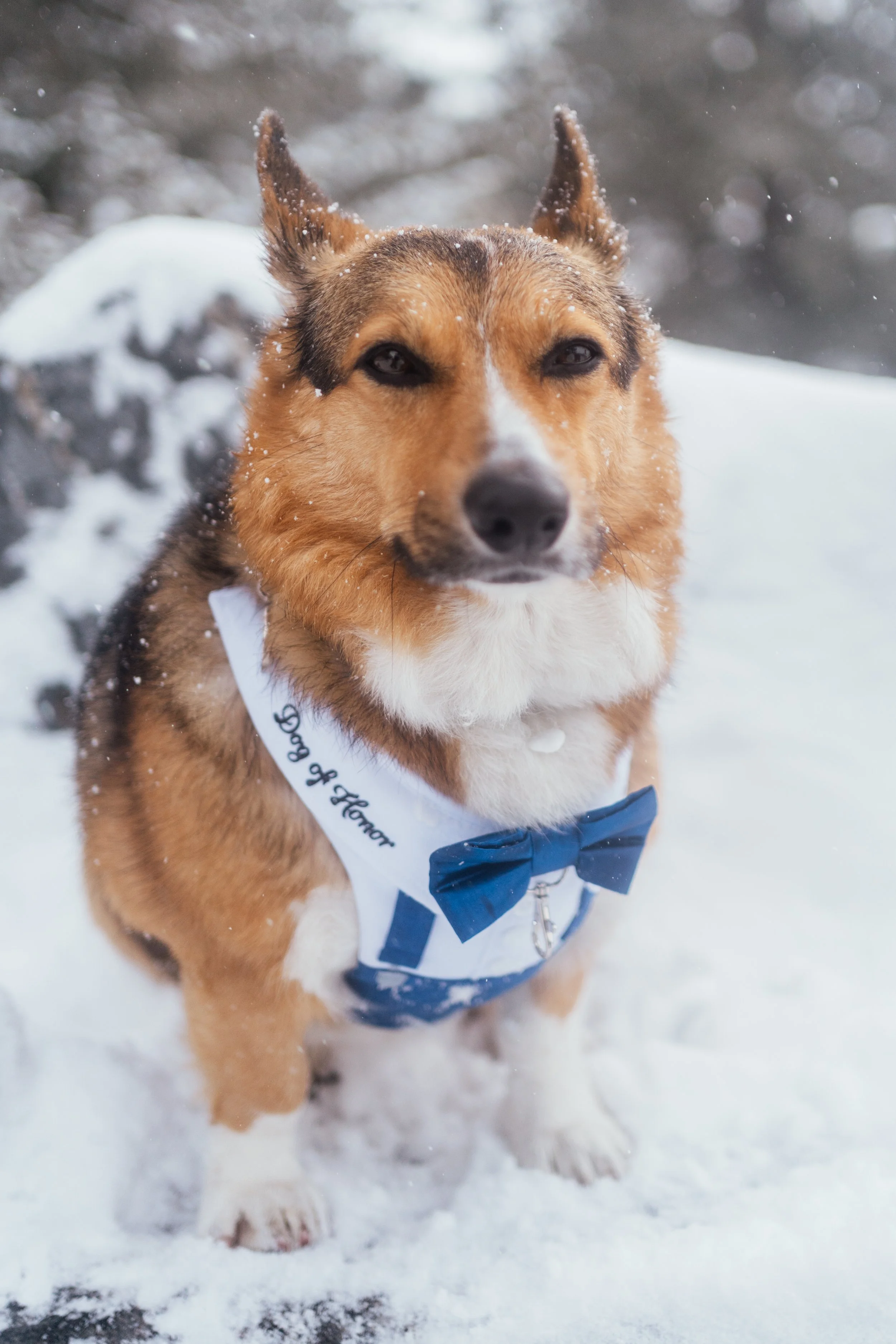
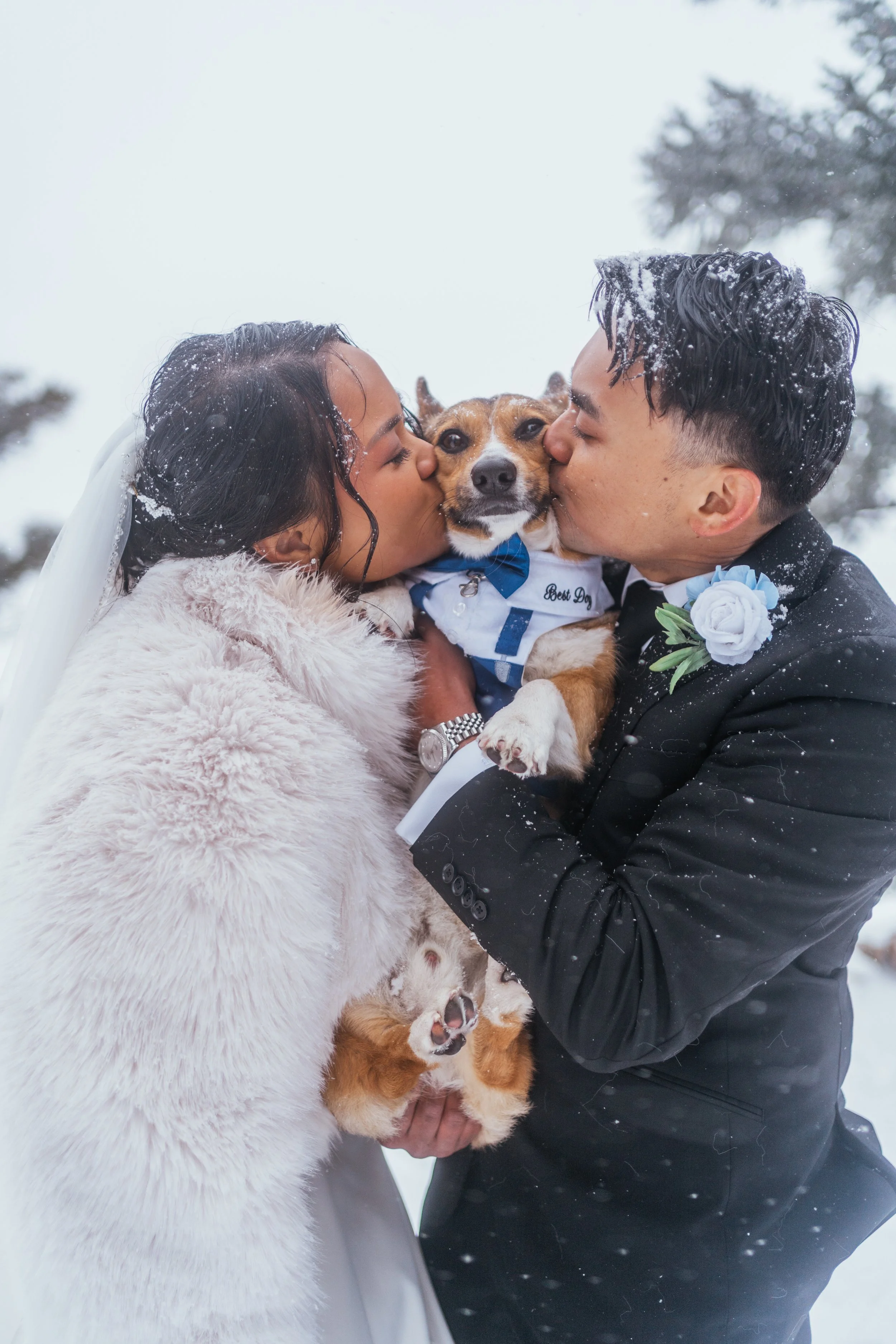
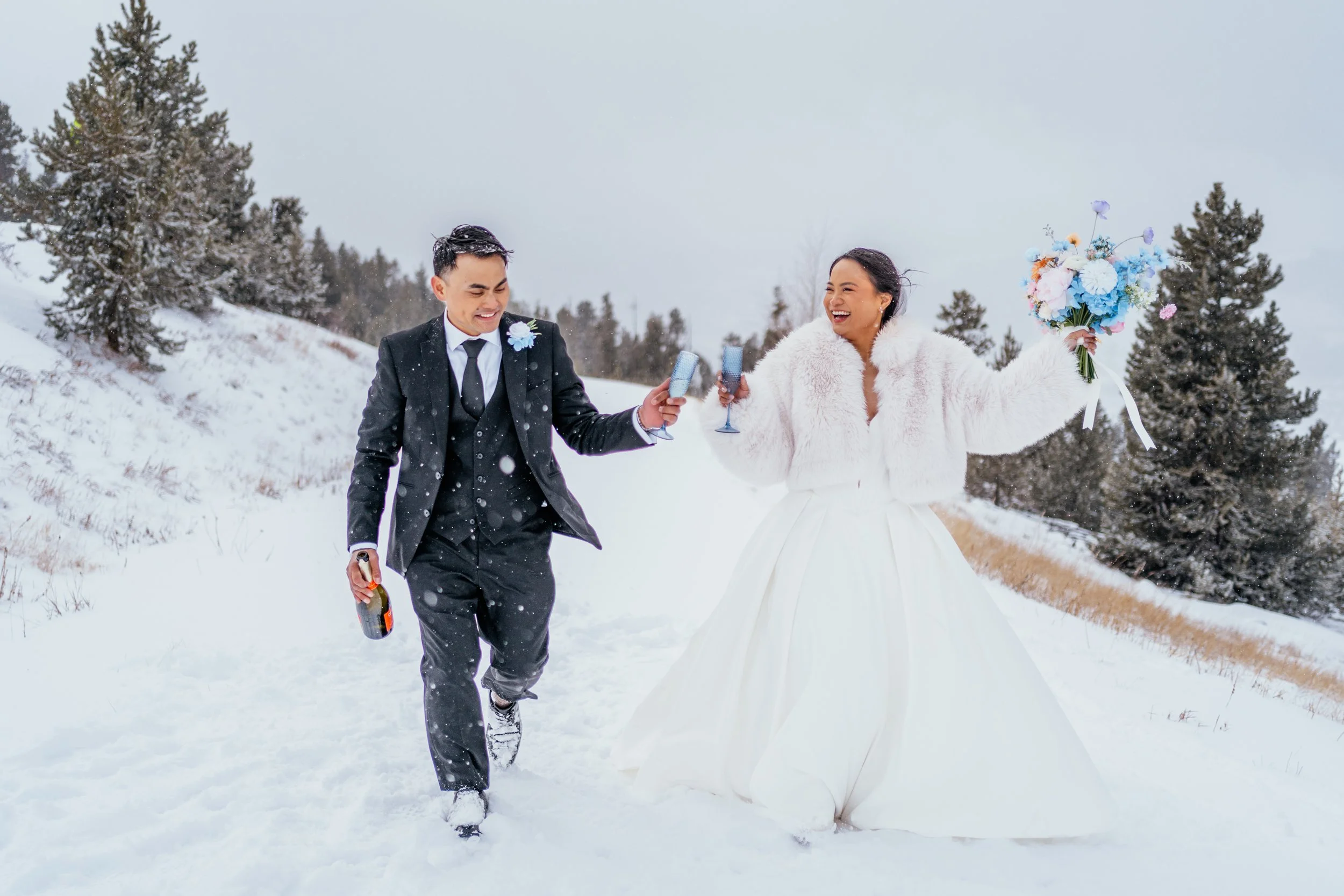
They arrived at Sapphire Point around 7:30 in the morning, within the reserved ceremony window, and used the time fully. Their dog, Bowser, was there. Their vows were gorgeous. They stood in the storm and became married in the middle of it. There is a tendency, especially online, to talk about elopements as though they are streamlined alternatives to “real” weddings, as though their intimacy somehow makes them smaller. The scale is not smaller. It is simply rearranged. Less emphasis is placed on performance and more on sensation. The experience becomes concentrated. Snow on the veil. Champagne in the cold. A dog at the ceremony. The feeling of walking around as newlyweds while weather gathers on your shoulders. Those things do not reduce the day. They thicken it.
Photography / Videography at Sapphire Point
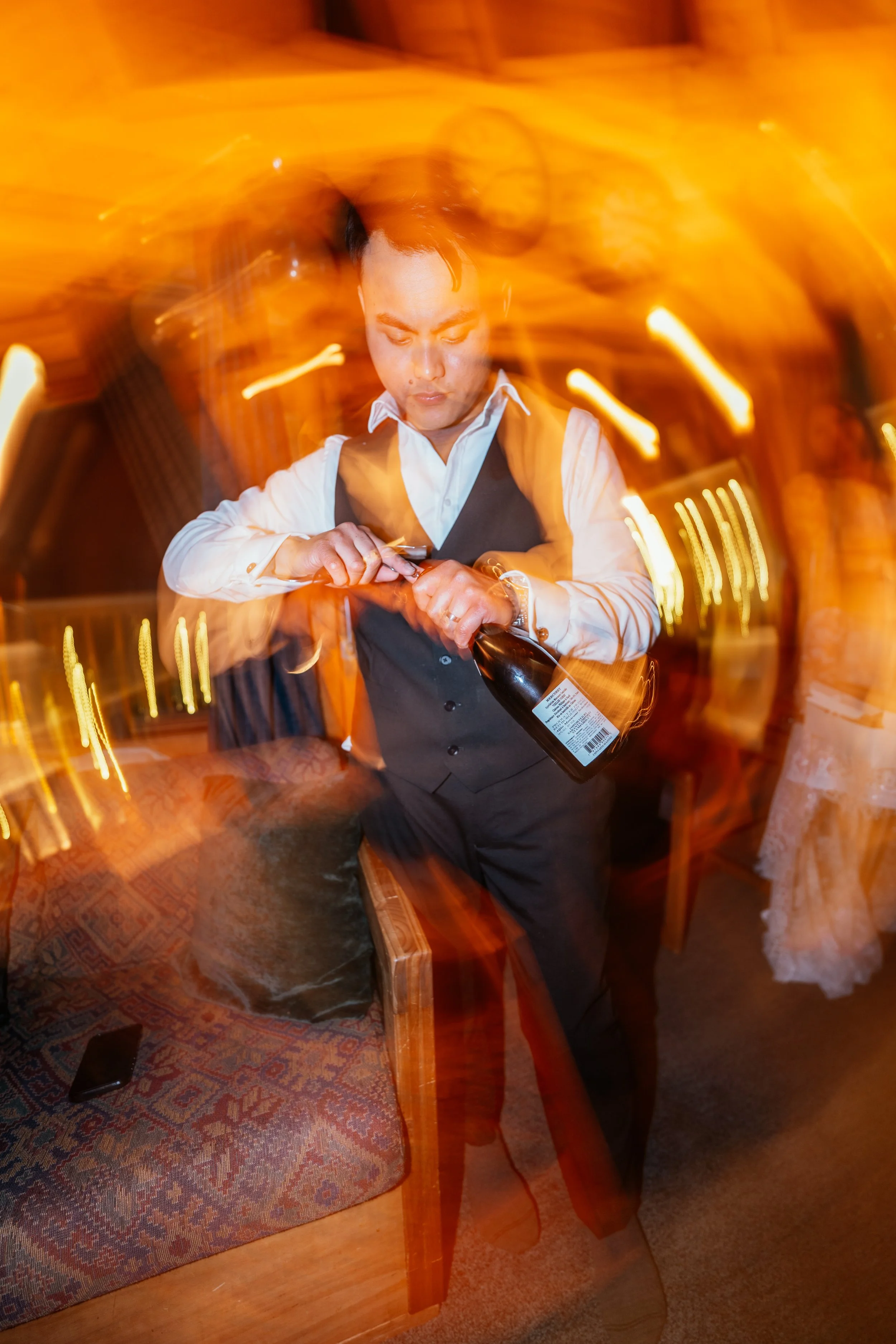
Rather than staging a long sequence of rigid portraits, we encouraged them to walk around, dance, do things, hang out. This feels, to me, like the central emotional thesis not only of the day but of the article itself: the best wedding imagery often comes not from asking people to look like they are having a beautiful time, but from protecting enough space for them to actually have one. Gela and TJ wanted to pop champagne, move through the snow, dance together, breathe in the fact that they had just gotten married. That became the material. The visual story came out of the lived story. And that distinction matters.
When we help couples plan an elopement, we try to focus less on what they want to look like and more on what they want to do. It is a deceptively simple idea, but it contains an entire philosophy of marriage, memory, and art. People rarely remember the exact angle of their bouquet for the rest of their lives. They remember the sensation of the day. They remember being cold and laughing anyway. They remember what it felt like when the weather that might have ruined other plans somehow became perfect for theirs. They remember dancing in boots, champagne stinging their hands, the whole horizon gone white.
Breakfast at the AirBnB with a Private Chef
By the time the ceremony portion ended, the day had already been full enough to count as memorable. But this was only the first chapter. Next came the drive back to the Airbnb, a Filipino-inspired breakfast prepared by a private chef, and then the part that made this elopement feel especially, unmistakably theirs: snowboarding together in wedding clothes, the mountain opening up around them, and a wedding day beginning to turn into something even more alive.
What came next was breakfast, and not the hasty, transitional kind that appears on most wedding days like an afterthought, a granola bar in the car, a coffee gone cold in the passenger seat, something functional and forgettable meant only to move people toward the next thing. This breakfast had shape and intention to it. It had been imagined in advance. It had been made part of the day. Back at the Airbnb, while the storm kept doing what storms do in the mountains, a private chef prepared a Filipino-inspired meal for everyone there, the kind of choice that immediately made the celebration feel less like a template and more like a reflection of actual people with actual tastes, histories, and desires. There was porridge made from broken rice, local pork folded into the meal, warmth returning to hands and faces after the cold ceremony, and the subtle but unmistakable feeling that the day was not merely being documented now, but lived in distinct chapters, each one different from the last, each one allowed to take on its own mood.
Snowboarding in Breckenridge
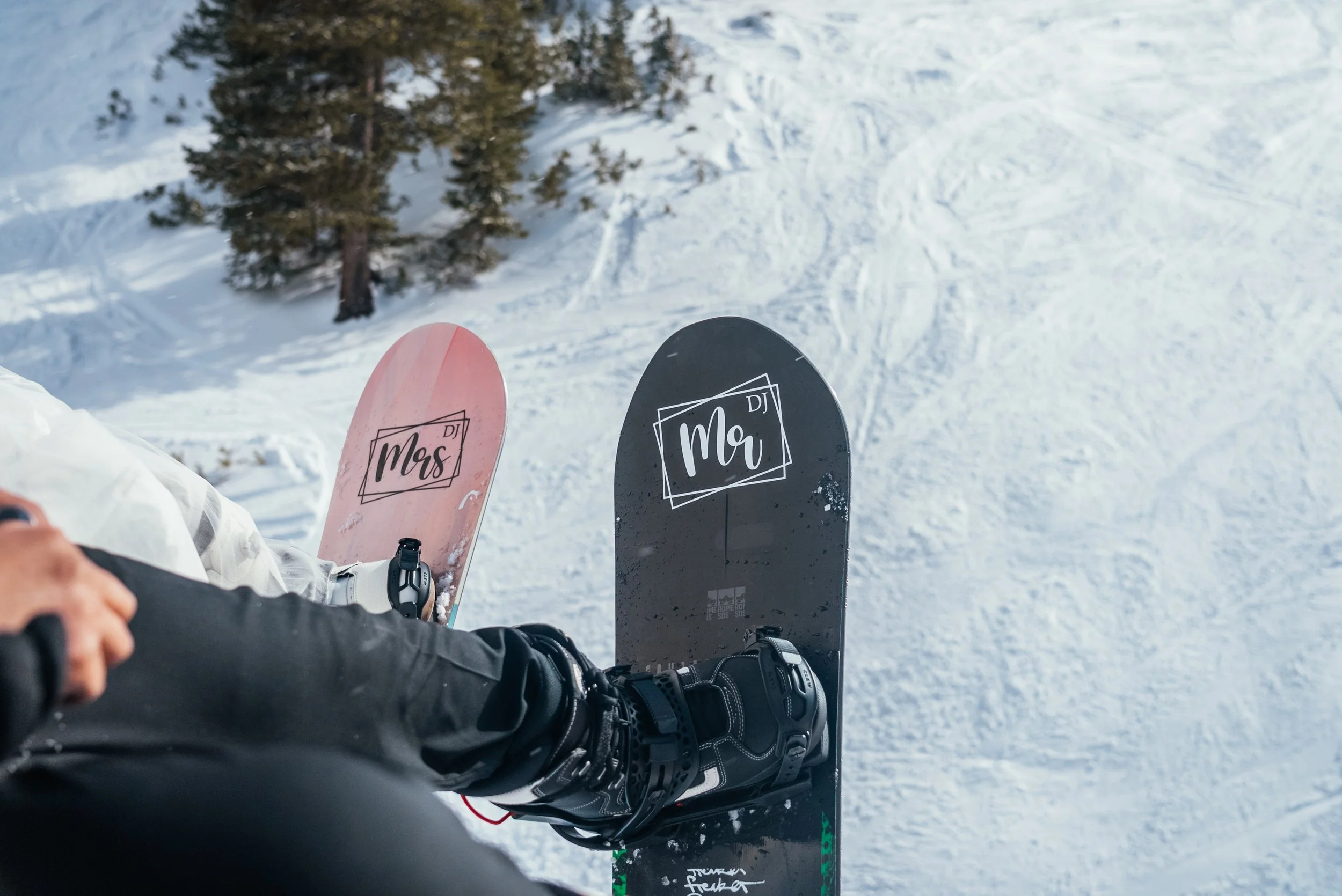
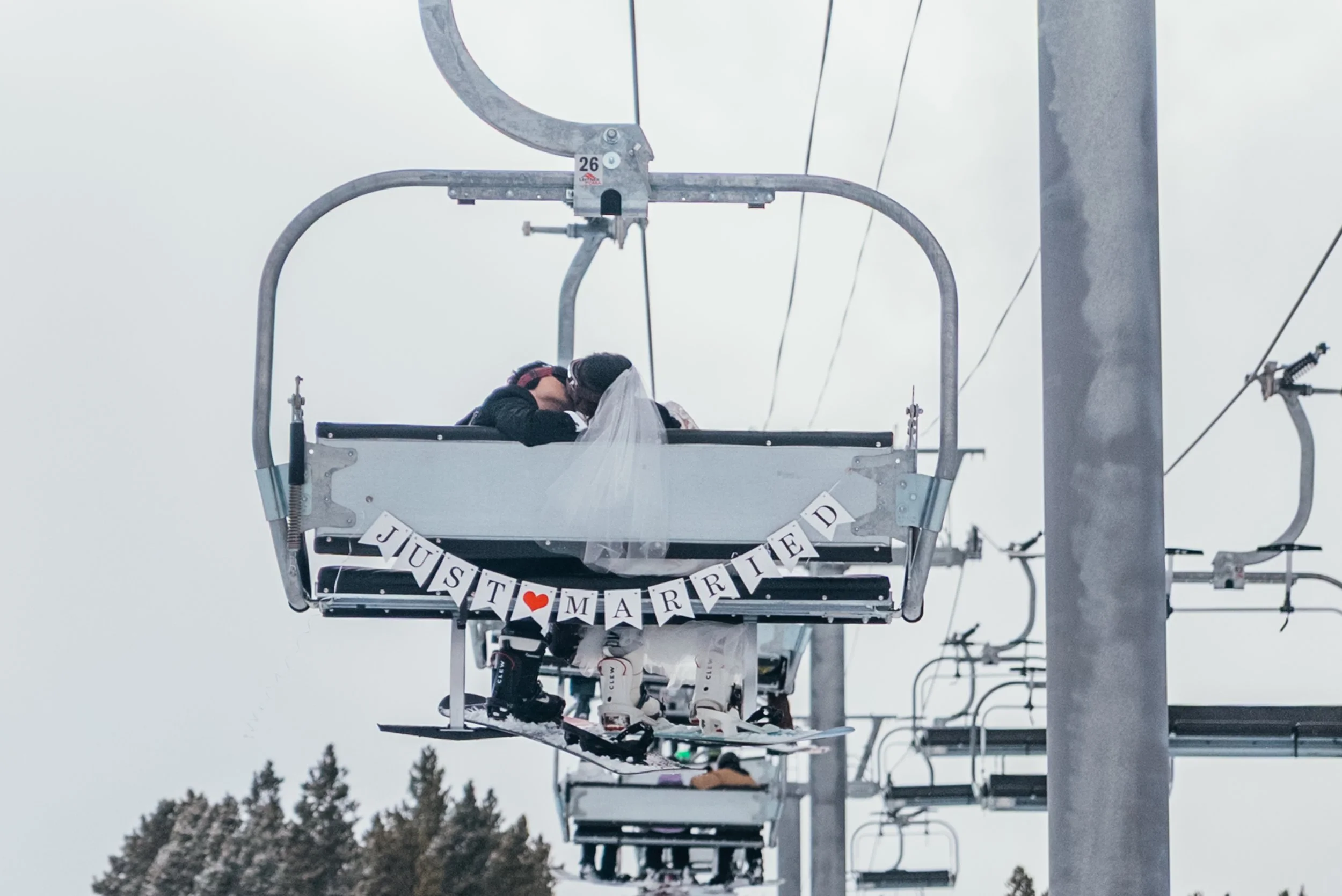
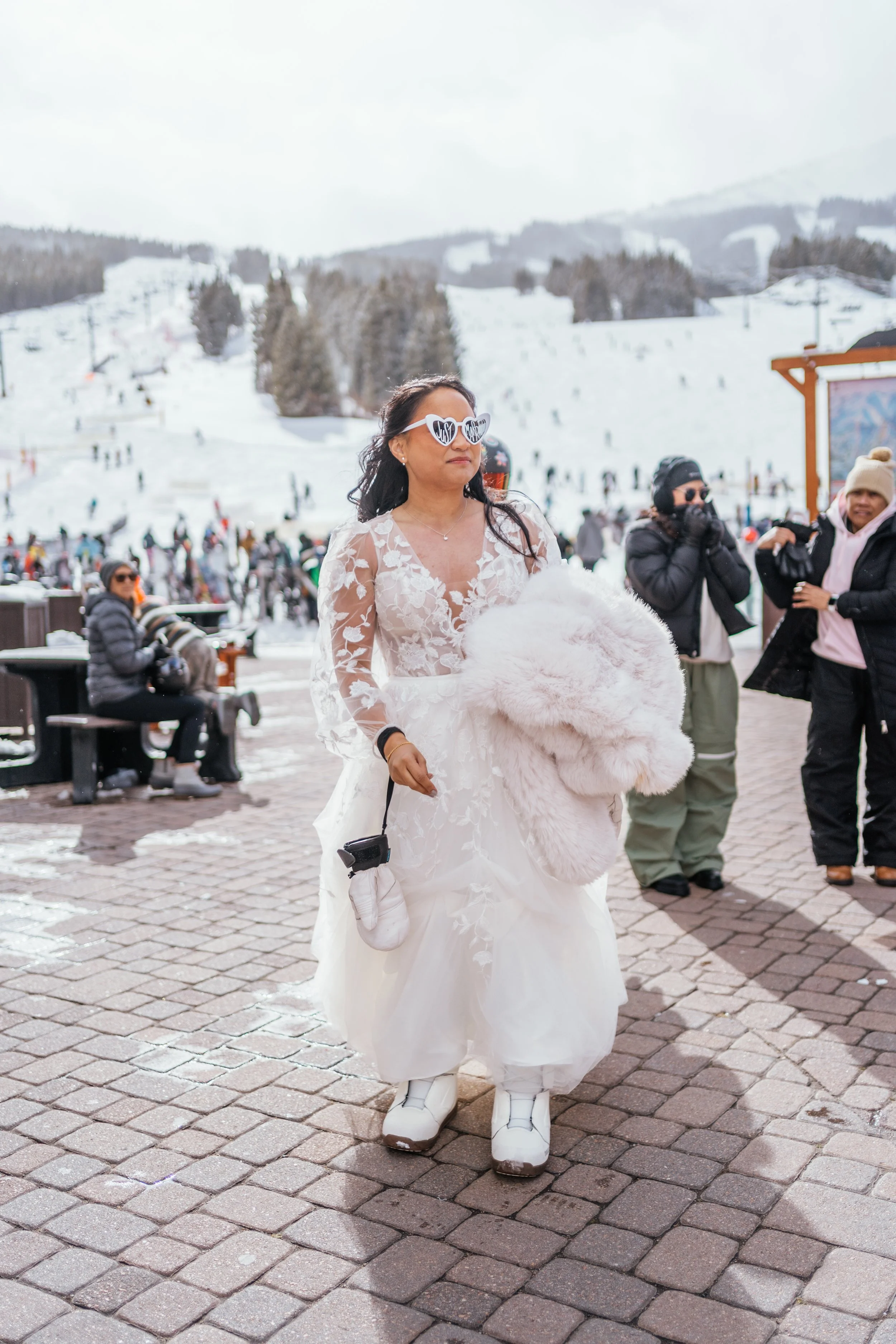
At the lift, there was a practical question that needed solving, the sort of small, oddly specific problem real wedding days are always presenting: what to do with the just married sign on the chair. They had brought little magnets and used them to secure the back, which resulted in not only a workable solution but some beautiful images too, the kind that only happen when ingenuity meets a little chaos.
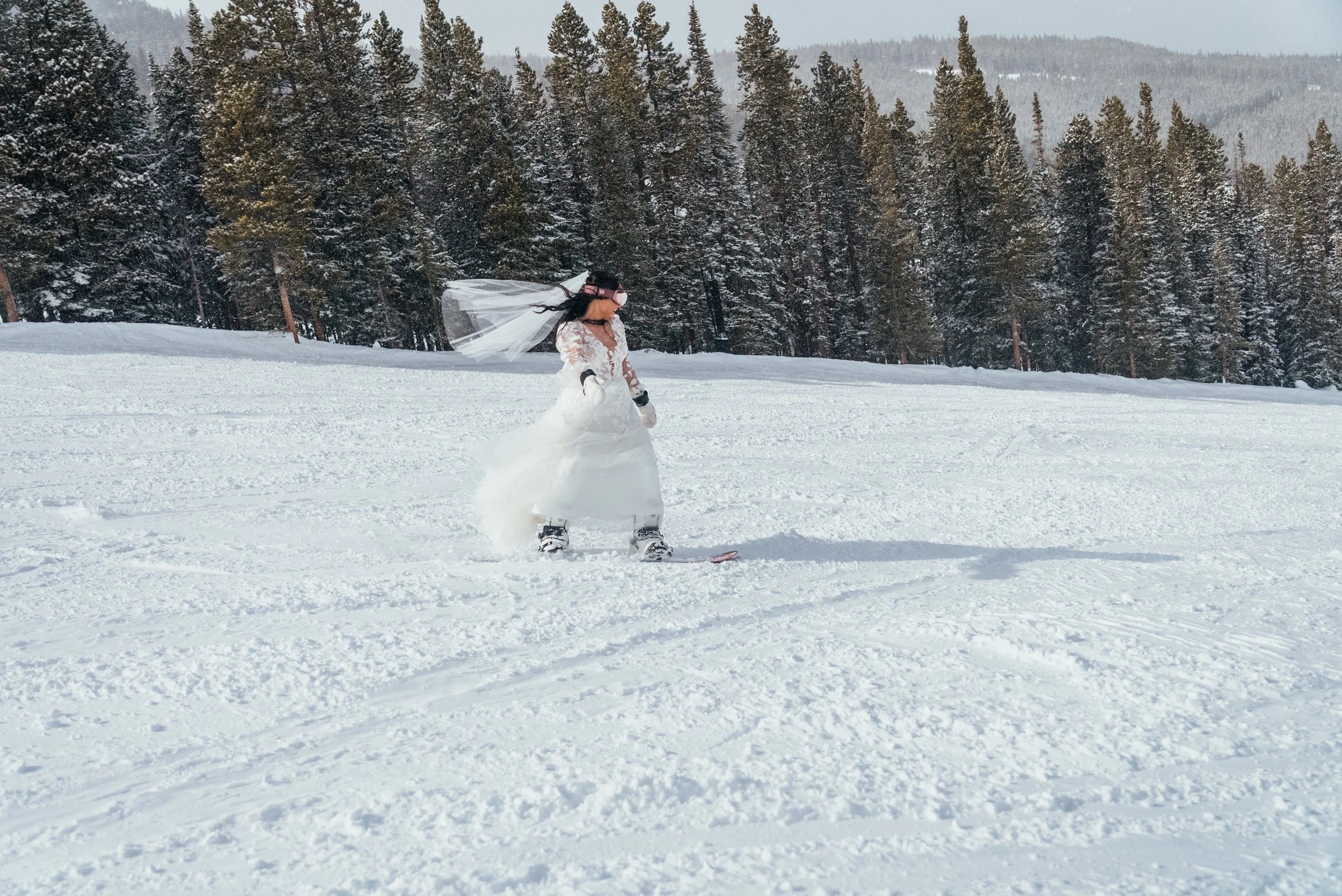
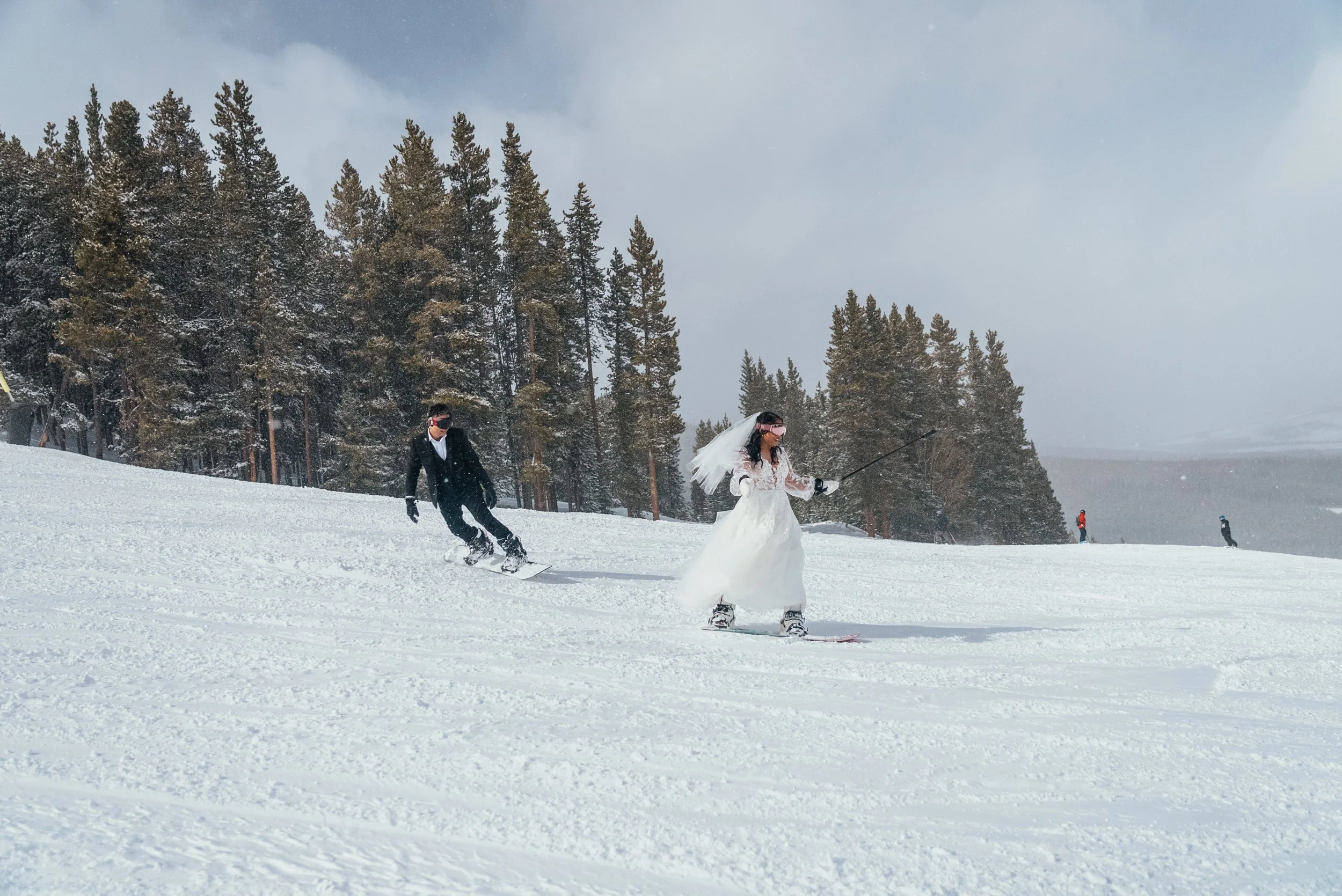
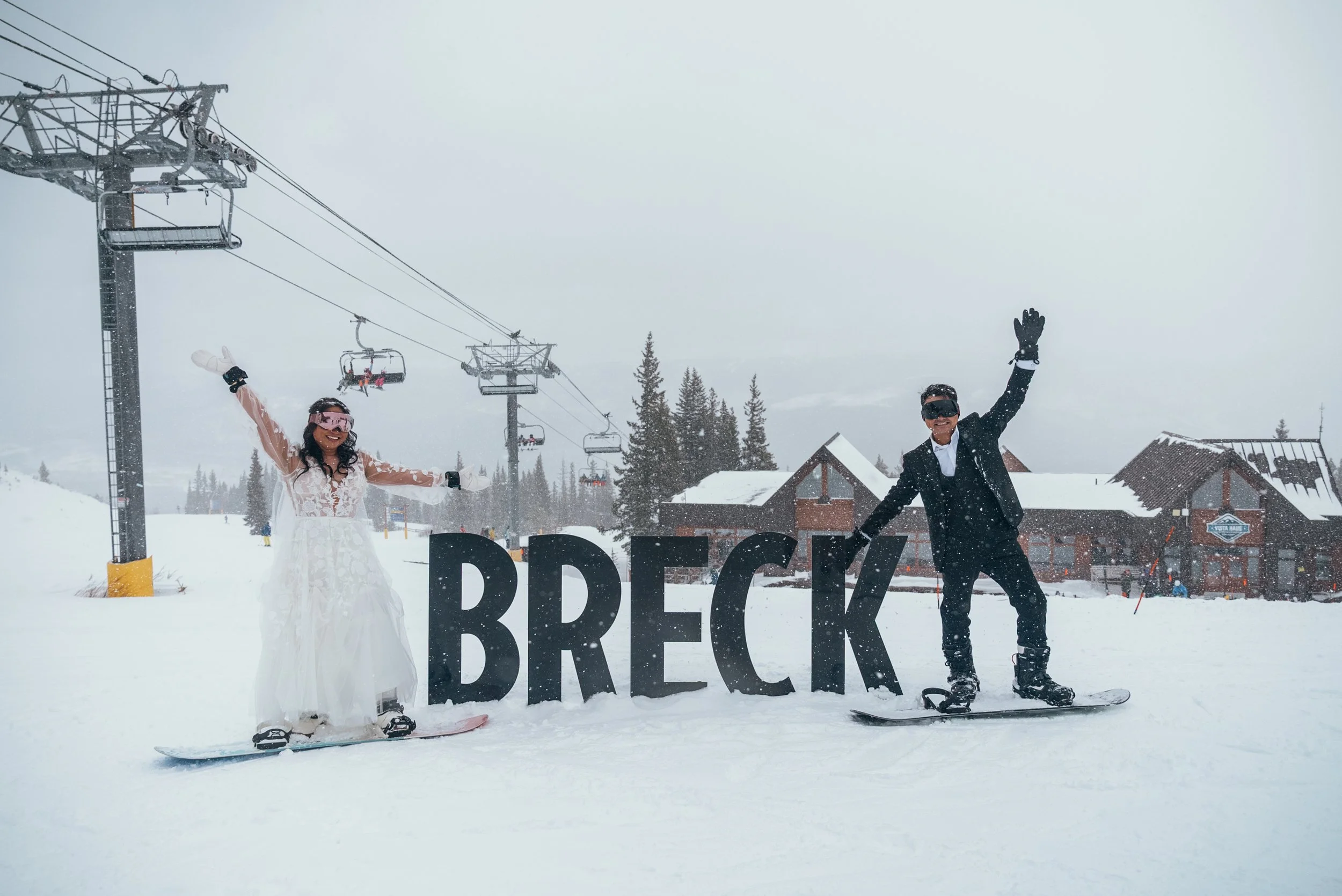
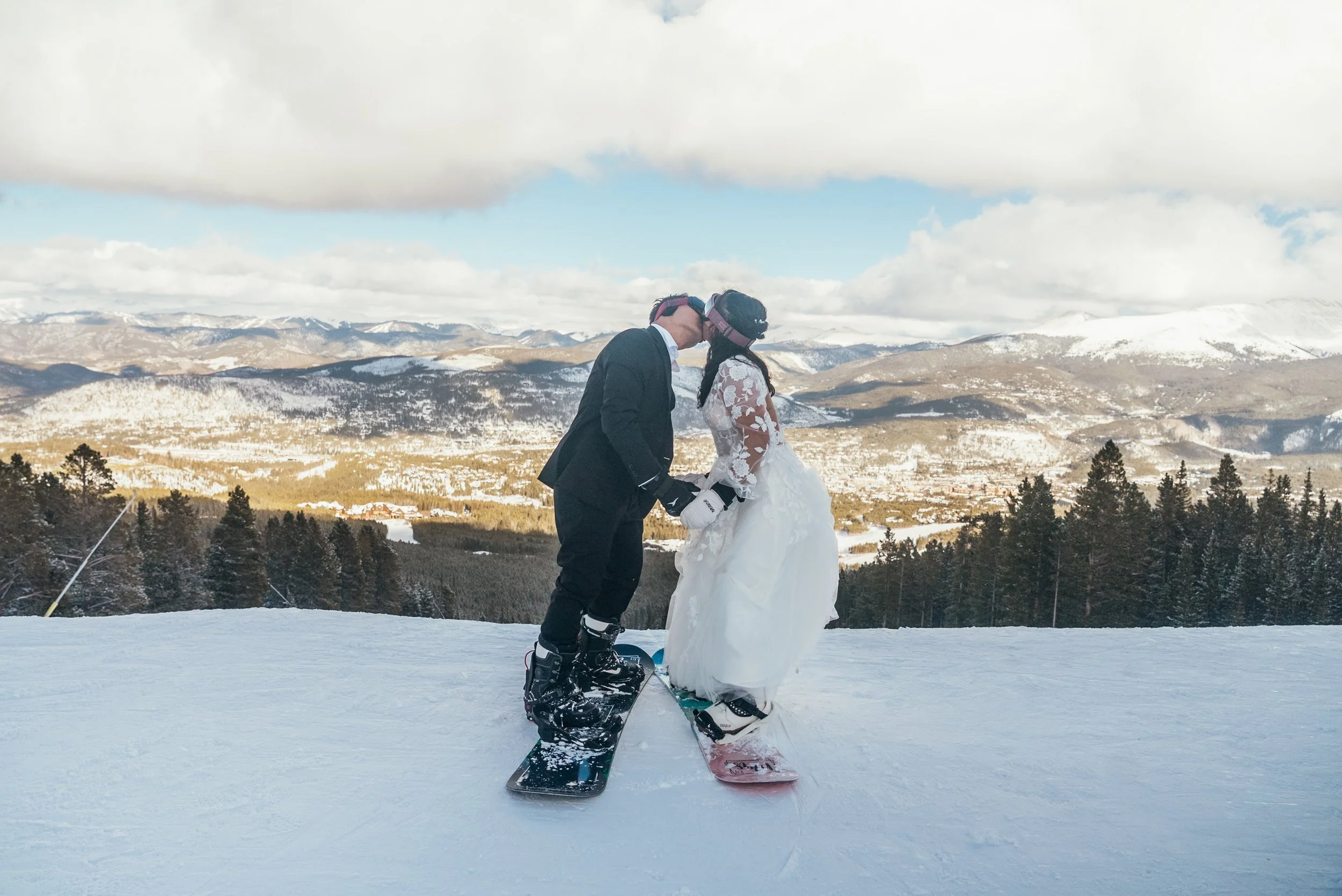
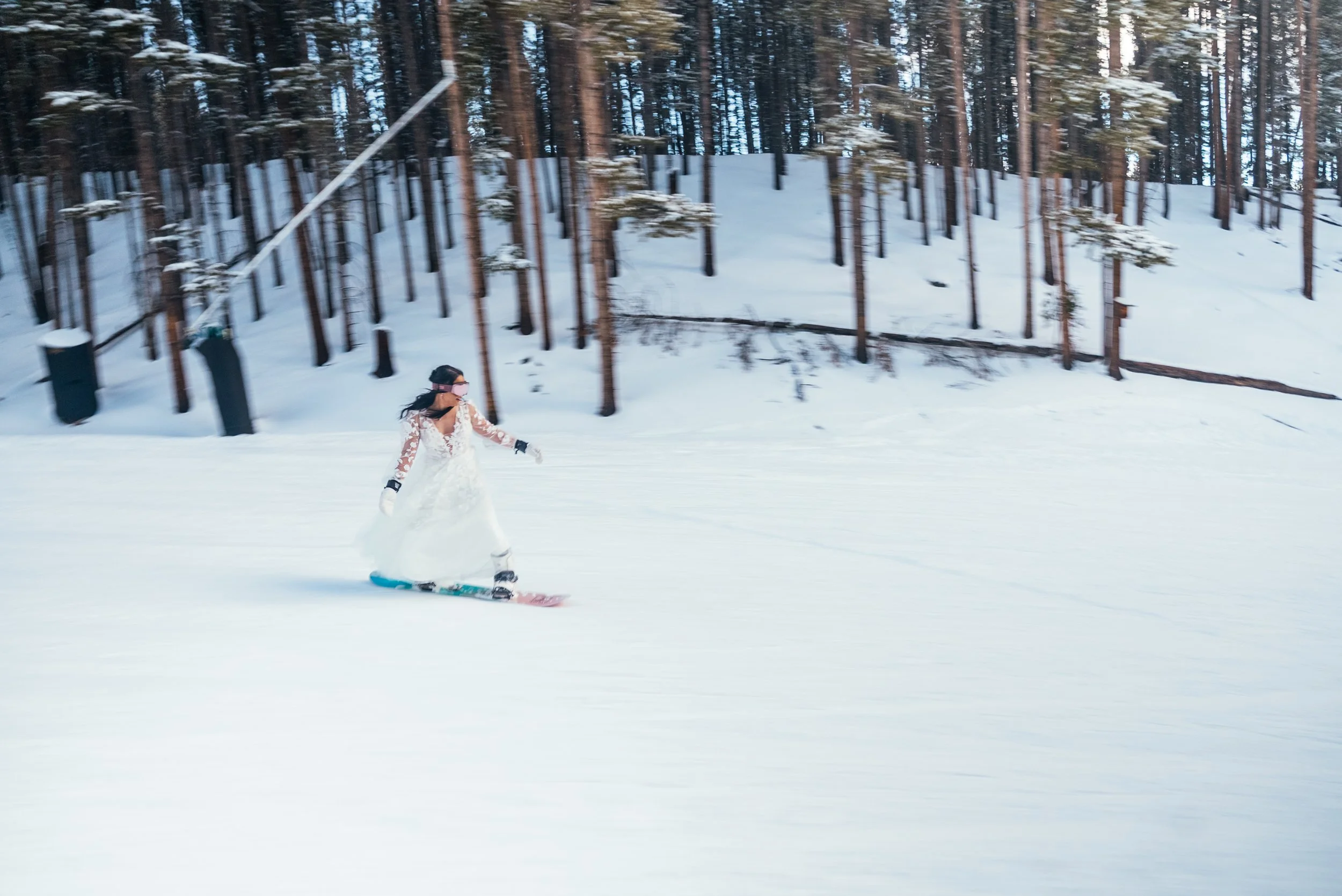
Once they reached the top, the day opened up again. Snowboarding is one of those activities that immediately changes the emotional tempo of a story. Walking through snow in wedding clothes is romantic. Riding through it is exhilarating. Suddenly the mountain was not just a backdrop or a place to take portraits. It became an instrument the day could actually play.
The couple spun each other around. They tried little jumps. They laughed. They moved. They did what people in love and fully alive in their own day tend to do when given room: they played.
Play is a strangely underrated part of romance. So much of the wedding industry, and so much of the imagery that surrounds it, is preoccupied with elegance, sentiment, poise, beauty, even grandeur, all of which can be wonderful, all of which have their place. But relationships survive and deepen not only through seriousness and devotion.
They deepen through delight. Through inside jokes. Through messing around. Through knowing how to make each other laugh when everything else feels large and ceremonial. Watching a couple ski or snowboard together on their wedding day is a reminder that intimacy is often most visible not when people are trying to look profound, but when they are relaxed enough to be ridiculous together.
Gela and TJ were not just celebrating their marriage on the mountain. They were inhabiting the kind of marriage they seemed likely to have, one with momentum in it, one with joy that is active rather than merely observed.
Après-Ski at T-Bar in Breckenridge
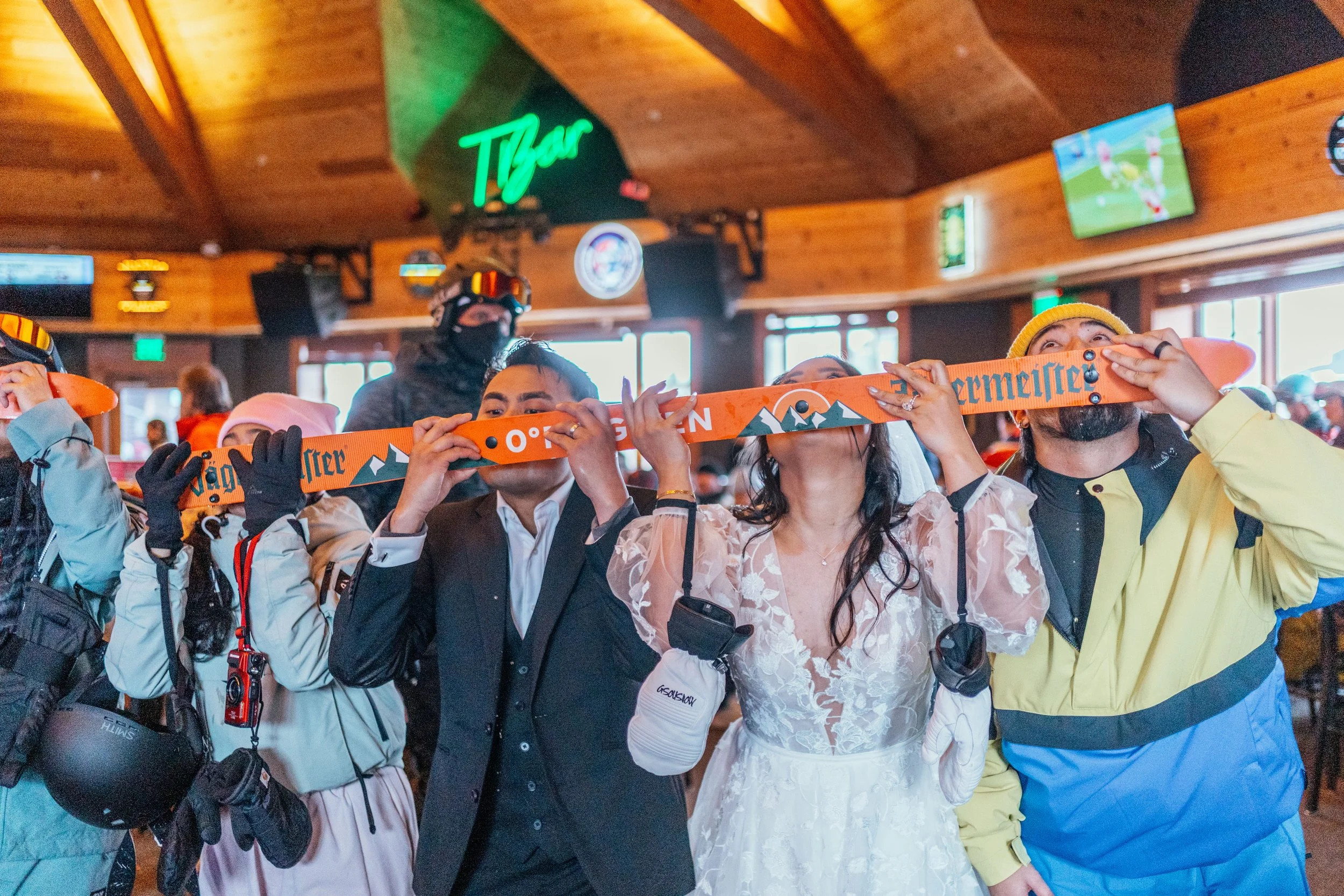
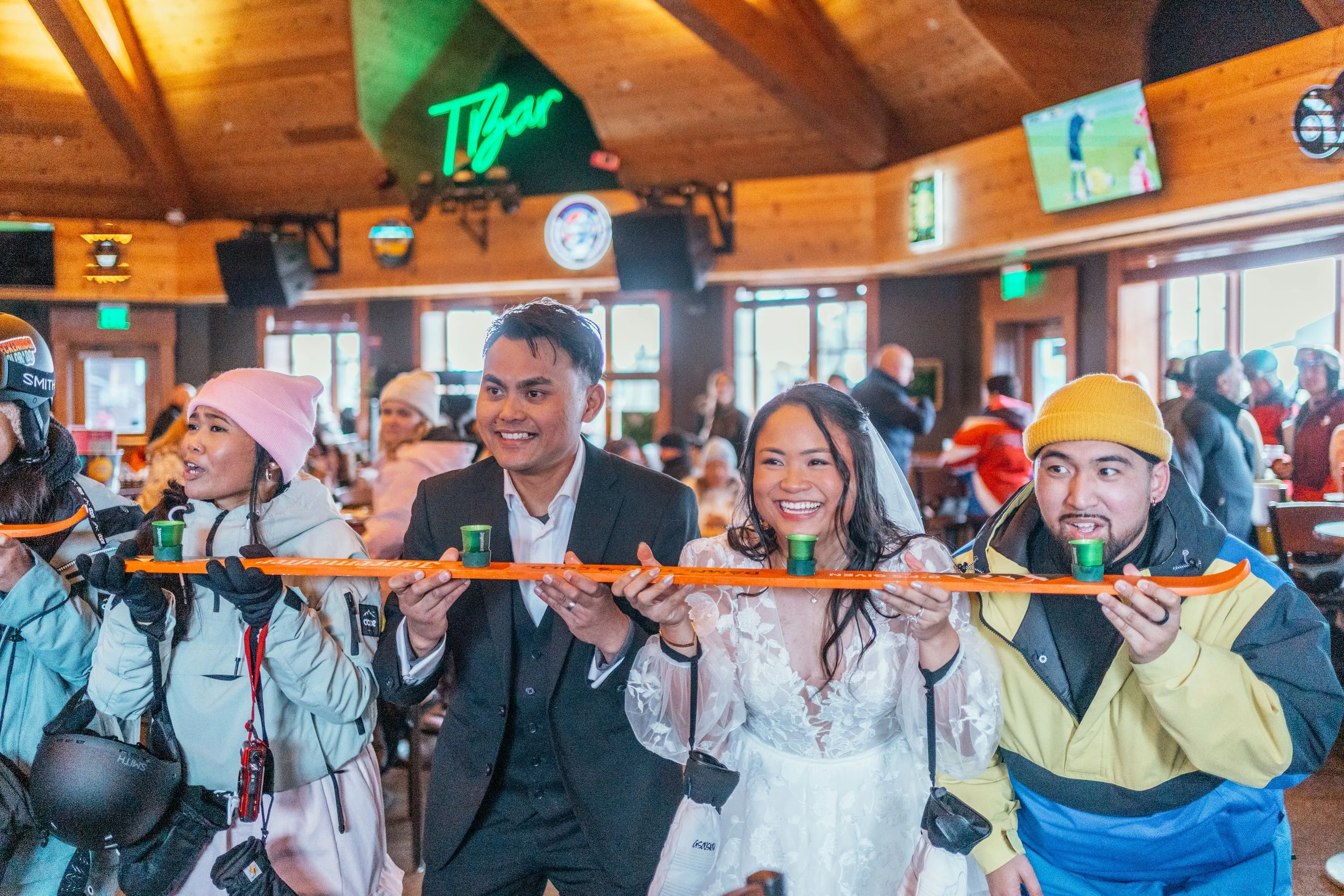
And because every good adventure contains an intermission, there was après-ski. At the base of the resort, they ducked into a bar, still wearing the evidence of the day, still unmistakably wedding-shaped, and the room, in one of those small public gestures that can feel weirdly moving, turned toward them and broke into applause. Strangers cheered. The couple laughed. The mood, already bright, somehow lifted again. There is something about a public acknowledgment like that which cuts through all the visual beauty and lands somewhere more human. Marriage, for all its private meaning, is still a social ritual. Even when the ceremony is intimate, even when the day is unconventional, there is something lovely about the world briefly noticing and responding. A bar full of people cheering for two cold, happy newlyweds in the middle of a ski day feels exactly like the sort of blessing an elopement should allow for: unscripted, communal, a little rowdy, and entirely genuine.
They headed back out for more runs after that, though by later in the day the cold had begun to insist on itself. Wedding clothes, no matter how beautiful, are not always designed for wind on a mountain, and Gela’s dress, open at the back, had begun to lose the negotiation with the elements. By then everyone was tired in the real, earned way that follows a day which has asked a lot of your body and given a lot back in return.
There is a kind of fatigue that feels almost luxurious when it arrives after joy, and that seems to have been the mood as they returned to the Airbnb. Not disappointment. Not depletion. Just that slightly dazed feeling of having already lived what might have been enough for an entire wedding day, only to realize the day was still not over.
Nap Time!
Before dinner, there was time for a nap, which somehow feels like the most honest wedding-day detail imaginable. People had been up since early morning. The couple had hardly slept the night before. Rest was not an interruption to the celebration. It was part of its rhythm.
By evening, the house had taken on a different kind of atmosphere. The mountain energy receded. The light shifted indoors. Meanwhile, the chef and his team had been at work preparing dinner for the group, around fifteen people in all, a meal that stretched to five or six courses and gave the night its next identity. If the morning had belonged to anticipation and the afternoon to exhilaration, the evening belonged to gathering. This is one of the most quietly beautiful things an elopement can do. It can move between emotional registers without having to maintain one performance all day long. It can be windswept and athletic and private at noon, then candlelit and familial and full of toasts by night. The format is flexible enough to let a day breathe.
Dinner with a Private Chef
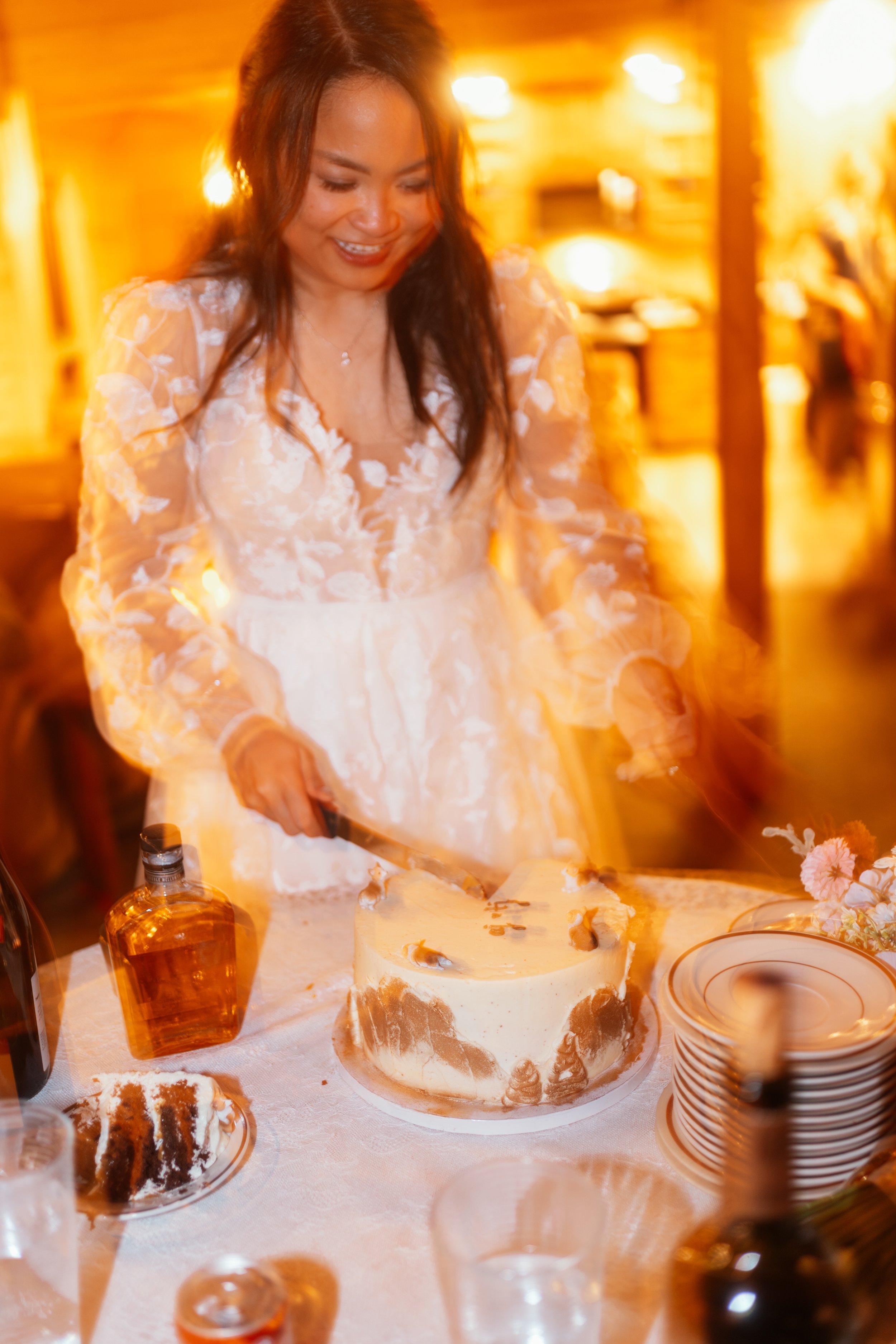
Dinner also made room for some of the more traditional rituals, though by now tradition had been so thoroughly absorbed into the couple’s own style that it no longer felt inherited. It felt chosen. There was a first dance, there was cake cutting, there were toasts, and each of these moments seems to have landed not as obligatory milestones but as welcome opportunities to linger in front of the people they loved. This, perhaps, is another misconception about elopements worth letting go of: that they require the abandonment of tradition in order to be meaningful. They do not. What they require, at least at their best, is discernment. Keep what feels like you. Let go of what does not. A first dance after a snowboarding session and a private-chef dinner is still a first dance. It may even feel more vivid because it exists in a day that has already broken open the boundaries of what a wedding can be.
The After-Party
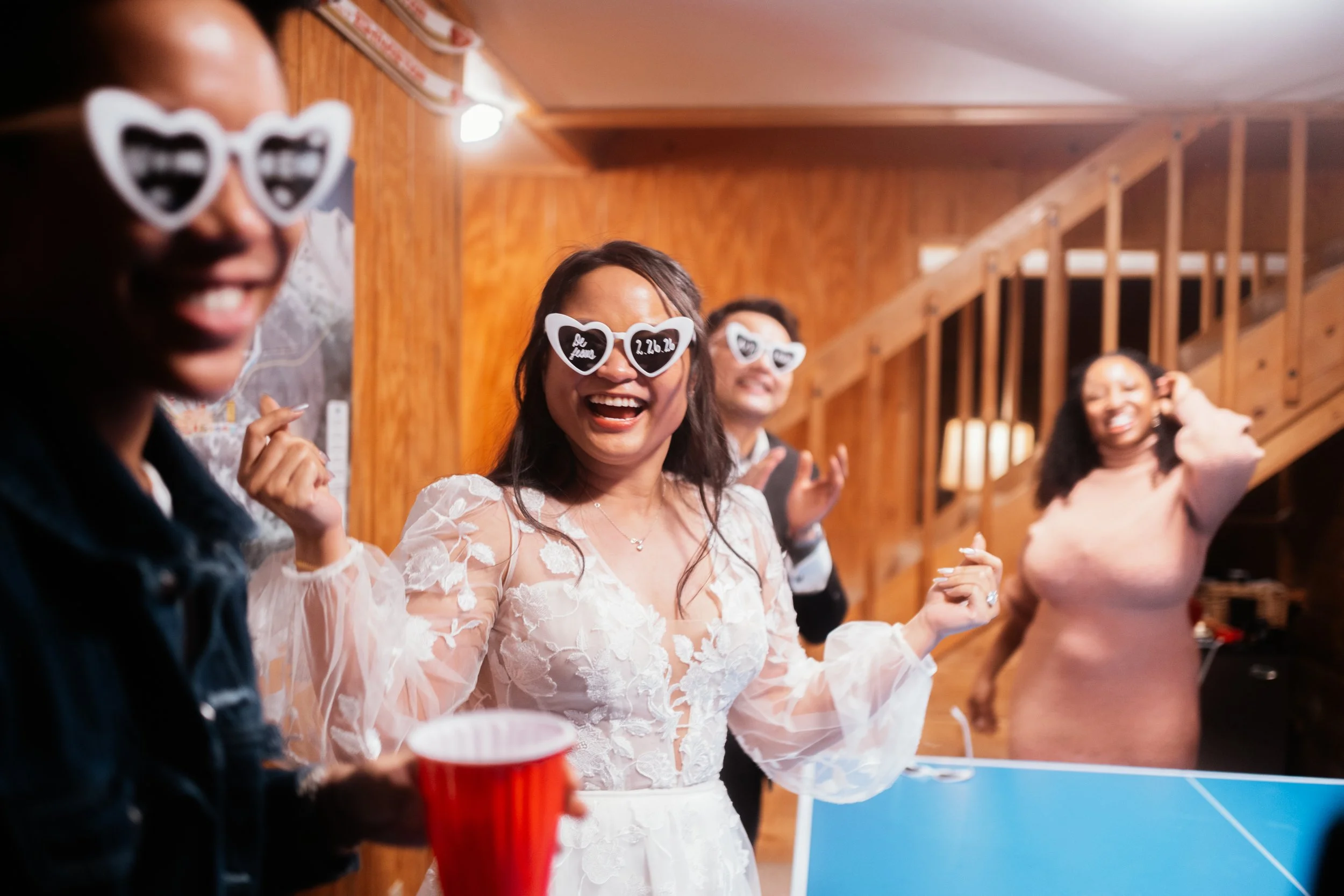
Then, because the day had one last turn left in it, the celebration headed downstairs. There was a game of Rage Cage, a room full of laughter and shouting and flying ping-pong balls, and that particular late-night energy that only appears once everybody has crossed beyond formality and into the looser territory of real celebration. What I love about ending here is that it refuses the tidy, overly polished final note wedding narratives often reach for. Real joy is not always quiet. Sometimes it is blurry at the edges.
Sometimes it is loud, half-chaotic, lit by flash, full of movement and noise and people forgetting, for a moment, to curate themselves. There is something wonderfully democratic about a wedding day ending not in an immaculate tableau, but in a basement game with friends, the couple still fully inside the mess and delight of their own lives.
What Made This Elopement Special
That, in the end, is what makes this kind of day so memorable. Not only the snow, though the snow was beautiful. Not only Sapphire Point, though Sapphire Point in a storm has its own kind of majesty. Not only the dress on the mountain, the dog at the ceremony, the applause in the bar, or the dinner that gathered everyone back together. What makes it memorable is the coherence of it all. The day never drifted into generic beauty. It stayed specific. It belonged to Gela and TJ from start to finish.
A lot of people spend their elopement trying to figure out what kind of wedding they are supposed to want. A day like this offers a better question. What would feel most like us? What would we remember not because it looked impressive from the outside, but because it felt alive from within? For some couples, the answer will be a ballroom, or a chapel, or a field in late summer. For others, it will be a snowstorm in Colorado, vows at an overlook, breakfast with family, laps on the mountain, dinner back at the Airbnb, and a little beautiful chaos before bed.
There is no single right way to get married. There is only the rare and lovely chance to do it in a way that tells the truth.
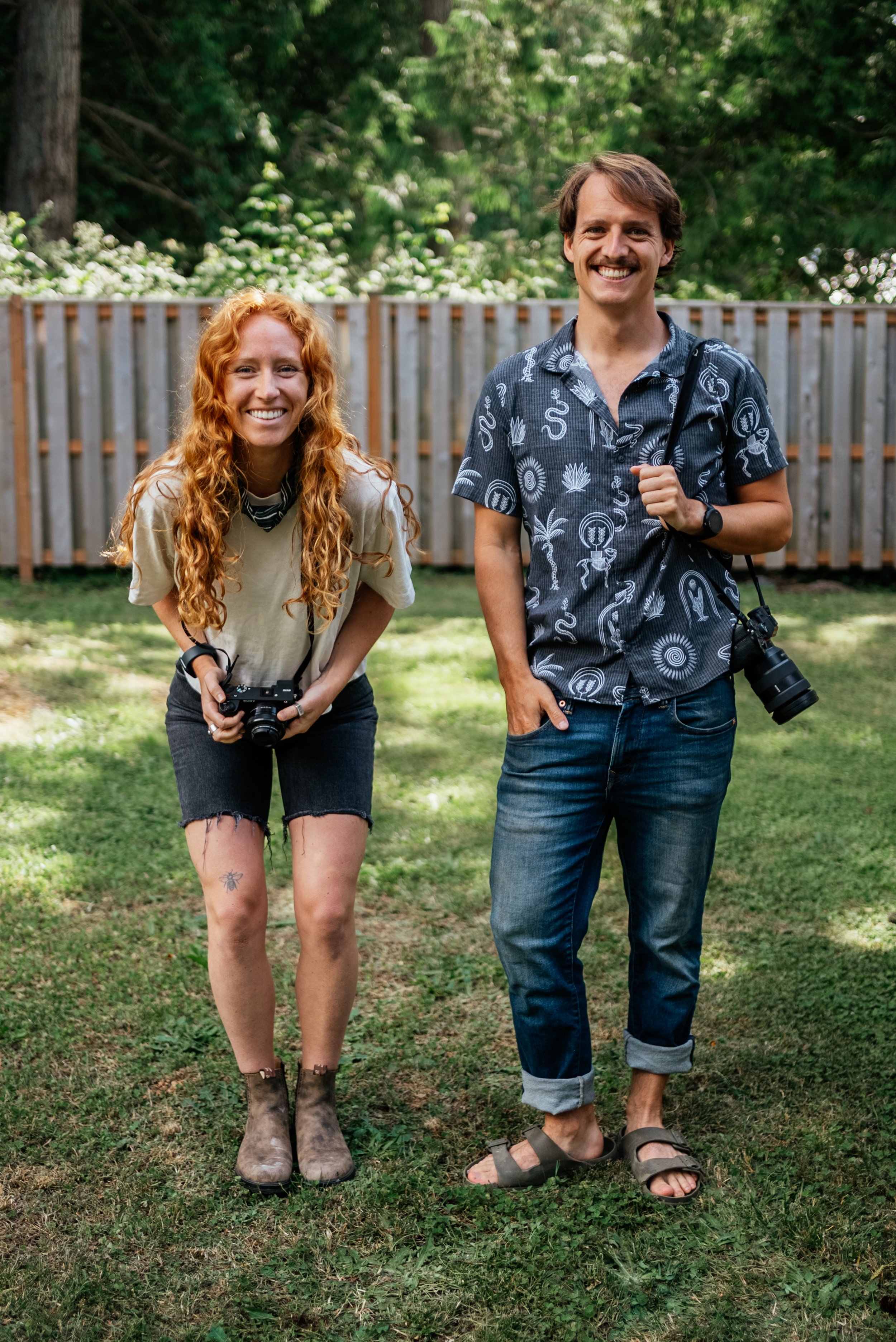
If this sounds right up your alley and you’re looking for some local Colorado folks to help you plan and capture your elopement day, fill out the contact form below to get in touch with us!